

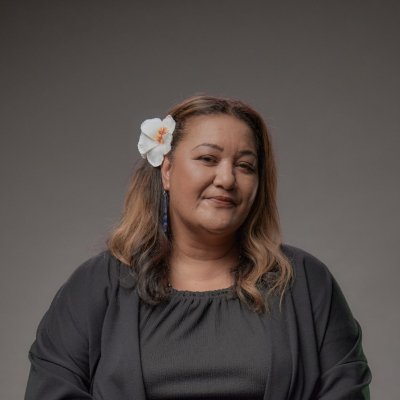
Helen Schmidt-Sopoaga has been a dapaanz registered practitioner since 2004 and a member of dapaanz since 2002. She is an accredited clinical supervisor and serves on multiple national committees and advisory groups.
In November 2025, she was awarded lifetime membership of dapaanz in recognition of her leadership and service to dapaanz, the wider addiction workforce and Pasifika communities across Aotearoa and beyond.
Here we share Helen’s reflections on some of the key milestones and a-ha moments in her career.
Scroll to the bottom to read a little more about Helen’s career.
Ka mua, ka muri | Looking back to move forward
What does being an addiction practitioner mean to you?
“O le ala i le pule o le tautua – The pathway to leadership is service
An addiction practitioner is a holder of hope for whaanau, good at being in relationship with whaanau and looking after this relationship. Their practice is mana enhancing and mana protecting with both whaanau and colleagues. It’s about showing fa’aaloalo / respect (non-judgemental), understanding cultural competencies and working alongside whaanau – supporting mana Motuhake (to support autonomy in making decisions).
An addiction practitioner is intelligent, kind, brave, flexible; ethically practicing and asking for support, knowing limitations and seeking to be better (committed to professional development and personal development and attending supervision regularly or requesting it if it is not offered.”
What changes have you noticed over the course of your career?
- Dapaanz growing in numbers and strength to support members. Listening and actively ensuring that professional development is accessible and getting the best for members
- The rise of methamphetamine impacts on Pacific families here and overseas in the Pacific Islands
- Ongoing work with equity and access for Maori and Pacific. Representation valued and supported to be at tables to make decisions. Decision makers making the time to talk to Pacific people and understanding what is needed
- The value of lived experience and provision of paid roles
- Technology. The future with AI.
What do you know now that you wish you’d known earlier in your career?
“What supervision is for. It would have helped me to trust the supervision process. I thought I had to do it on my own, or I felt I would be judged or there would be negative consequences if I showed my gaps or limitations. I didn’t like group supervision. It made me anxious and I didn’t talk very much, even though there was a lot to say. I was struggling with clients and felt overwhelmed at the start. I was too busy and avoided supervision. I had a high case load and tried to enjoy team celebrations but was always worried about getting back to clients.
Now I see these as learning opportunities and I have had very good supervisors. Supervision untangled a lot of the work and I started to see the humanness in me, and the humanness in our whaanau. It helped me see where I was in the bigger scheme of things, reminding me of the skills and talents (lack of a better word, haha) I had overlooked or didn’t see.
I take self-care seriously, I take holidays regularly and am grateful for the wonderful supervisors I have had. This has shaped my supervision with others and my career.
Lastly, working in mainstream, there were times I didn’t understand certain ways of thinking when working with clients and their families. That my ideas came from my own identity with being Samoan and being a woman – that hospitality and working in groups is normal. A lot of time I felt confused about non-Pacific and the work, I didn’t feel like I belonged. At university, we had a strong Pacific contingent, where we had a number of Pacific initiatives e.g. Pacific room for learning, Pacific tutoring classes for undergraduates. Connecting with Tupu services, Pacific AOD cultural services, helped me feel connected again and welcomed; made me feel like I was home. That’s why it’s important to support Pacific clinicians with cultural competency and connect them with cultural supervision or opportunities to attend Pacific fono, workshops and conferences. I am forever grateful to Tupu services’ leadership group and the managers who supported me and support me now.“
Is there anyone you would like to recognise or acknowledge who may have had a big impact on your career?
“Ia muamua sii le fa’afetai I le Atua mo lona alofa ia te au ma lou aiga. Firstly I thank God for his love and blessing for my family and me.
I have a wonderful career and lots of caring people I am connected with.
My parents inspired me to pursue education, they migrated to Aotearoa – worked since they lived here and my mum didn’t speak a lot of English for most of her life, always had a smile. Growing up I saw them struggle, get belittled, judged and be discriminated. I didn’t know it at the time but I look back and understand it wasn’t okay. I don’t want anyone coming to an addiction service to experience this. So it’s shaped how I am.
I talked about Tupu Services’ leadership group and managers who recognised the importance for me to connect. Also DRUA leaders past and present, and Pacific leaders in health sector have made a big impact on my career, they were welcoming and always there to support. Le Va leadership, their service supported me throughout my career and gave me a lot of opportunities, helping me to realise potential and the bigger picture.“
What is one tip, or indispensable tool that you’d recommend to others in the addiction workforce?
“I have talked about good supervision. You don’t have to make that decision on your own – keep asking questions.
Have a holiday, the work will still be there.
Don’t forget the little things count – a smile, an offer of a cuppa or water, your tone of voice over the phone, offering help to fill out a form, using kia ora, talofa etc in welcoming whaanau, welcoming their families.“
About Helen
Helen has a background both in Psychology (University of Auckland) and Indigenous Studies (University of Otago). She has clinical experience in the addictions sector for over 25 years, including residential, youth, family, research, lived experience and outpatient services.
Helen works as a Clinical Team Leader for Community Alcohol and Drug services in South Auckland, the largest provider of alcohol and other drug treatment services in New Zealand. She is a registered dapaanz practitioner and accredited clinical supervisor. Helen co-chairs DRUA, the National Pasifika Addictions network, and is a member of NCAT (National Committee for Addiction Treatment), a member of the Te Whatu Ora National Pacific Health Senate Fatu Fono Ola and a member of Le Va Pasifika Mental Health and Addiction Clinical Reference Group.
She has a strong focus on Pacific workforce development, in particular for Pacific leaders, models of care for indigenous Pacific families especially women and children, and on access and equity for health services for Pacific peoples.
Helen is from Samoa, tamā Filoitumua Petelo Schmidt is from Safotu and Paia and tinā Asi Litia nee Lelevaga is from Iva and Asaga in Savaii. She also has aiga connections to Hamburg, Germany and Portugal, and lives in Tāmaki Makaurau with her husband, three children, two dogs and one cat.